.jpeg)
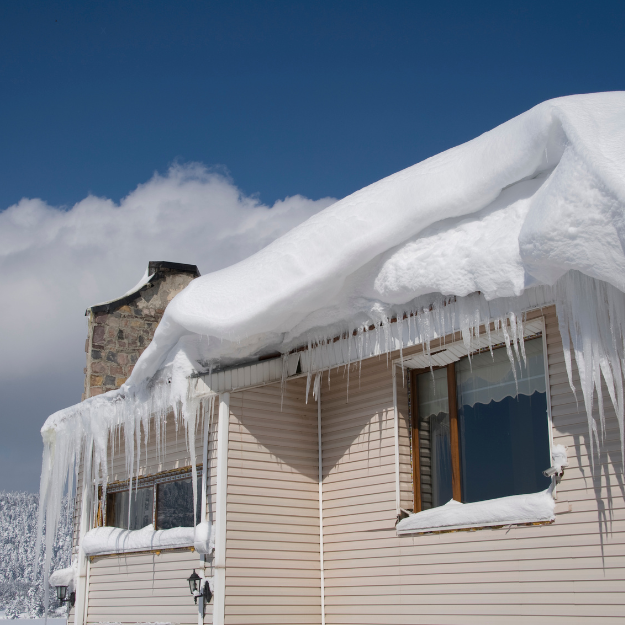
Ice dams are one of the most common winter home problems in Winnipeg, and also one of the most misunderstood. They often show up as a thick ridge of ice along the edge of a roof, sometimes with long icicles hanging off for dramatic effect. While they might look harmless, ice dams can cause serious roof leaks, interior water damage, and long-term structural issues if left unchecked.
What is an ice dam, exactly?
An ice dam forms when snow on a roof melts and then refreezes near the eaves. Heat escaping from the home warms the upper portion of the roof, causing snow to melt. As that water flows downward, it reaches the colder overhang and freezes. Over time, this repeated melting and refreezing creates a solid barrier of ice.
Once an ice dam forms, melting snow has nowhere to drain. Water backs up under shingles, seeps into areas never designed to be waterproof, and can eventually leak into the attic, walls, or ceilings.
Why ice dams are so common in Winnipeg homes
Ice dams aren’t caused by heavy snowfall alone. They’re caused by temperature differences, and Winnipeg winters are particularly good at creating them. Extended cold periods, sudden warm-ups, and large temperature swings create ideal conditions for ice dam formation.
Homes with inadequate attic insulation, poor ventilation, or air leaks around attic hatches, bathroom fans, or recessed lighting are especially susceptible. Warm air escaping into the attic heats the roof unevenly, leading to snow melt in some areas and refreezing in others.
Ice dams can cause interior damage
Despite forming on the roof, ice dams are rarely just a roofing issue. They’re often a symptom of heat loss and moisture problems inside the home. As water backs up under shingles, it can soak insulation, rot roof decking, damage drywall, and cause staining or bubbling on ceilings and walls.
In many cases, the visible interior damage appears weeks or even months after the ice dam itself has melted, making the source of the problem harder to identify.
Can you remove the ice dam yourself?
Trying to chip ice off a roof can cause more damage than it prevents. Shingles, gutters, and flashing are easily damaged, and there’s an obvious safety risk. Pouring hot water may offer temporary relief, but the water often refreezes and worsens the issue.
Short-term solutions like calcium chloride ice melt can help create drainage channels, but they do not address the underlying cause. They are a temporary fix, not a prevention strategy.
Preventing ice dams, long-term
The most effective way to prevent ice dams is to keep roof temperatures consistent. That usually means improving attic insulation, sealing air leaks, and ensuring proper attic ventilation. When heat stays inside the living space and cold air circulates properly above the insulation, snow melts more evenly and refreezing is reduced.
During roof replacement, installing ice and water shield can provide added protection, but it works best when combined with proper insulation and ventilation improvements.
What ice dams mean for buyers and sellers
For home buyers, ice dams can be a warning sign of insulation or ventilation problems that aren’t obvious during warmer months. Evidence of past water damage, staining, or repairs near exterior walls can indicate recurring ice dam issues.
For sellers, unresolved ice dam problems may come up during inspections and negotiations. Winnipeg winters act as a stress test for homes, and buyers pay attention to how a property performs in extreme conditions.
The bottom line
Ice dams are not just a winter nuisance or cosmetic issue. In Winnipeg, they’re often a sign that heat is escaping where it shouldn’t be. Addressing ice dams properly means looking beyond the roof and fixing the underlying causes inside the home.
If ice dams are showing up every winter, it’s usually a sign that something isn’t quite working the way it should. Sometimes it’s minor, sometimes it’s not, and sometimes it only becomes an issue when a buyer, inspector, or insurer starts asking questions. If you’re buying or selling a home in winter—or trying to decide whether an issue is cosmetic or worth addressing—it helps to have a clear, practical perspective before it turns into a bigger problem.

Comments:
Post Your Comment: